

The story of the US is, in many ways, remarkable. It achieved independence against the odds, its constitution has lasted more than two centuries and its democracy has weathered war, economic depression, social upheaval and political change. But reflection on American history rarely settles into simple celebration.
From the beginning, the US was an experiment rather than an inheritance. It was built on the idea that free people could govern themselves through constitutional institutions. And because of that, Americans have repeatedly wondered whether the experiment was in danger of failing.
In some cases, fears proved exaggerated. In others, they were justified. But taken together, these moments reveal that fear of constitutional failure has been a recurring theme throughout US history. As the US approaches its 250th anniversary, several events stand out as moments of constitutional peril.
1. Tensions with France
The first major test of the constitution arrived soon after its signing in 1787. Eleven years later, in 1798, the formal alliance between the US and France was replaced with intense mutual hostility and paranoia as tensions grew over diplomatic insults and French attacks on American shipping. Congress passed the Alien and Sedition Acts as a response to external threats and domestic instability.
But critics saw something different: a government using fear to suppress dissent. The Sedition Act made certain criticisms of federal officials a crime, with newspapers and political opponents becoming targets of prosecution. For a nation that had recently fought a revolution in the name of liberty, this episode exposed an uncomfortable reality that constitutional rights could not be assumed.
The significance of the Alien and Sedition Acts lies not in their three-year duration but in the questions they raised. How much liberty are citizens willing to surrender when they believe the nation is under threat? And how much dissent can a democracy tolerate? Those questions have returned throughout American history.
2. The civil war
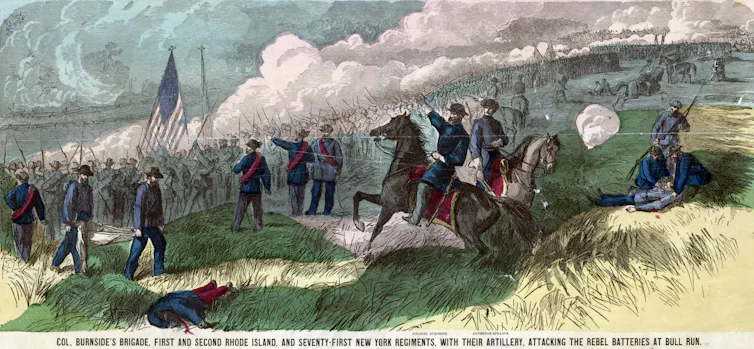
No crisis would test the republic more severely than the civil war in 1861. The decision of southern states to secede from the US shattered the assumption that political disagreements would remain within constitutional boundaries. This turned the long-running conflicts over slavery, citizenship, federal authority and the meaning of the union itself into open war.
Had the Confederacy succeeded, the US would probably have ceased to exist in the form envisioned by its founders. Yet even this example is more complicated than a simple narrative of survival. The union was preserved, slavery abolished and new constitutional amendments transformed legal definitions of freedom and citizenship. But these promises were only partially fulfilled.
The US government abandoned its efforts to protect the rights of newly freed Black Americans after the civil war, allowing the southern states to enforce legalised racial segregation and systemic disenfranchisement for nearly a century. This reminds us that constitutional survival and constitutional justice are not always the same thing.
Everett Collection/Shutterstock
3. McCarthyism
The 20th century brought new challenges. During the cold war, fears of communist influence and Soviet espionage spread throughout American society. Some fears were grounded in reality, but the atmosphere created by the “second red scare” (1947-59) extended far beyond legitimate security concerns.
Commonly associated with Senator Joseph McCarthy, this period is remembered not because Americans feared communism but because fear itself became politically powerful. Loyalty investigations, blacklists and public accusations affected thousands. People found their careers damaged or destroyed based on suspicion, association or allegations.
McCarthyism remains historically significant because its underlying dynamic is so familiar. When faced with threats, democratic societies often struggle to uphold civil liberties. This episode raises a broader question that remains relevant today: can a free society preserve its freedoms when citizens believe those freedoms are being exploited by enemies?
4. Watergate scandal
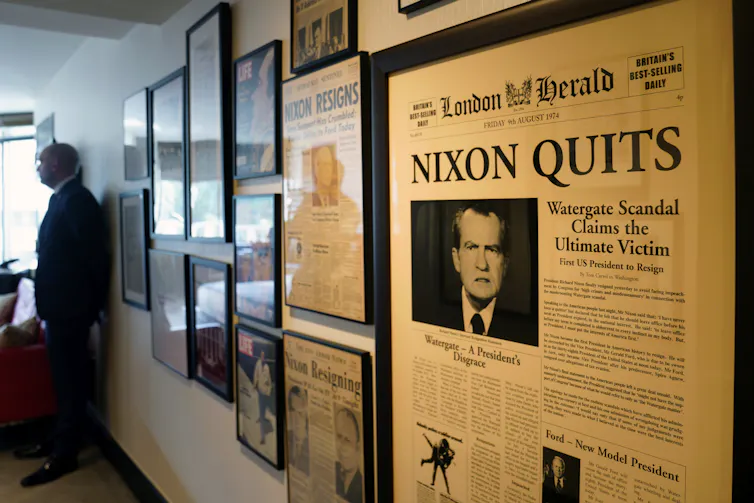
The Watergate scandal of 1972 to 1974 presented a different kind of constitutional challenge. What began as a burglary at the Democratic National Committee headquarters in Washington quickly evolved into broader investigations. These investigations exposed direct efforts by President Richard Nixon to obstruct justice, misuse government agencies and conceal wrongdoing within the executive branch.
At its heart was a central question: was the president subject to the law? Democracies depend on elections but also limits to power, even when that power is exercised by democratically elected leaders.
What makes Watergate noteworthy half a century later is not just the misconduct that was uncovered, but the response it provoked. Journalists investigated, courts asserted their authority, Congress conducted oversight and ultimately Nixon resigned. While Watergate shook public confidence, it demonstrated that constitutional checks and balances could function when tested.
Will Oliver / EPA
5. The 2020 election
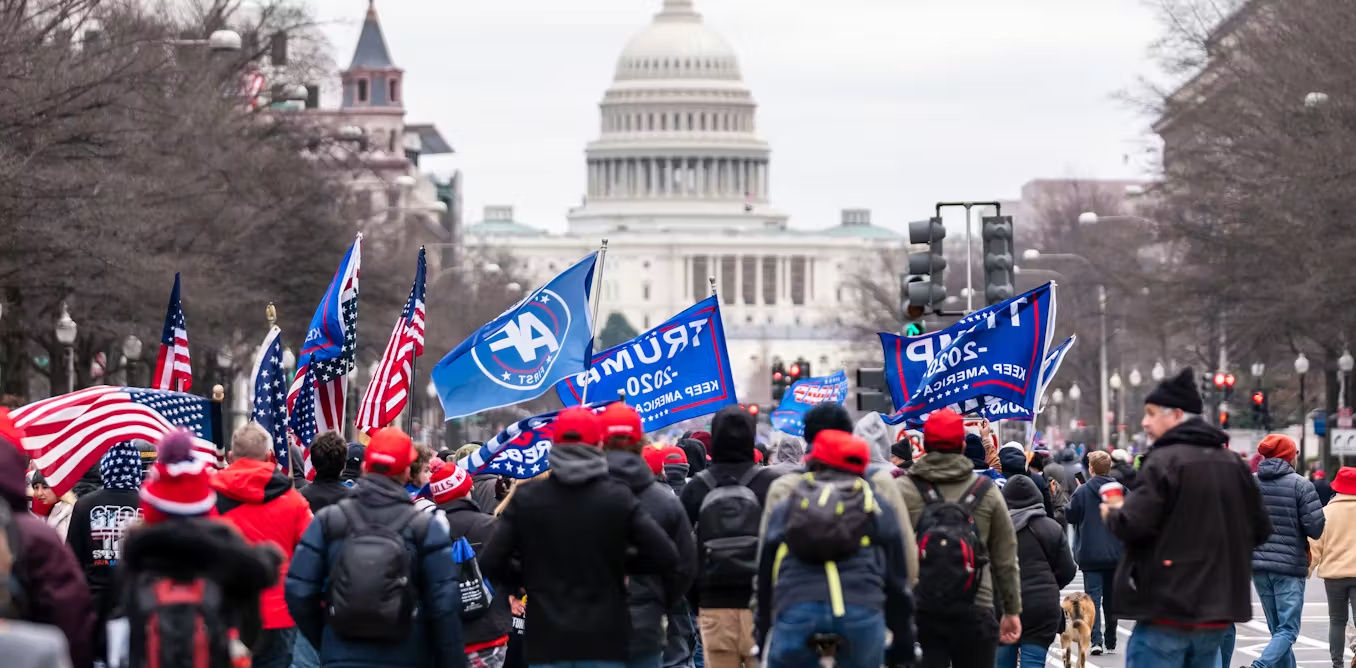
The most recent chapter in America’s story remains close enough to the present that its full historical significance is still debated. The aftermath of the 2020 election and events on January 6 2021, when Trump supporters staged a violent attack on the US Capitol building in Washington, exposed divisions over elections, legitimacy and democratic norms.
The attack disrupted a process that Americans had taken for granted: the formal certification of a presidential election and the peaceful transfer of power. What made this episode so important was the challenge it posed to confidence in electoral processes themselves. Democracies depend upon winners and losers accepting constitutional outcomes, even when they are disappointed by them.
The constitutional system ultimately carried out its responsibilities. Courts heard challenges, state officials certified results, Congress completed the certification process and the transfer of power took place. Yet this episode left enduring questions about public trust, political polarisation and American democratic health.
As Americans prepare to mark 250 years of independence, these different episodes suggest that constitutional government has never been self-sustaining. From fears of republican collapse to concerns about civil war, political repression, executive overreach and contested elections, each generation has confronted its own version of constitutional peril.
Perhaps the most remarkable feature of the American experience is not the crises themselves, but the debates over how to preserve the republic have endured alongside them. America’s constitutional democracy is not a finished achievement. It is a continuing project, renewed and tested by every generation.

