

In many cultures, the placenta is more than tissue left over after birth. It may be understood as spiritually linked to the baby, treated as a companion or sibling, and buried to protect the child or connect them to family and land.
Yet in many maternity settings, what happens to the placenta after birth may receive little discussion unless a woman already knows she can ask to take it home.
For my doctoral research on migrant Nigerian mothers’ experiences of antenatal care in the UK, one mother described wanting to keep her placenta for burial after birth.
This was something she had done after the births of her other children. But while navigating maternity care in a new country, other questions took priority, and she did not feel able to raise it with her midwife.
Her placenta was disposed of with no discussion. She later said: “They are supposed to ask me about these things, if they had asked I would have explained.” She felt a sense of loss and grieved for the placenta.
Her experience shows why placenta disposal should be discussed during pregnancy, rather than left until after birth.
Special meaning
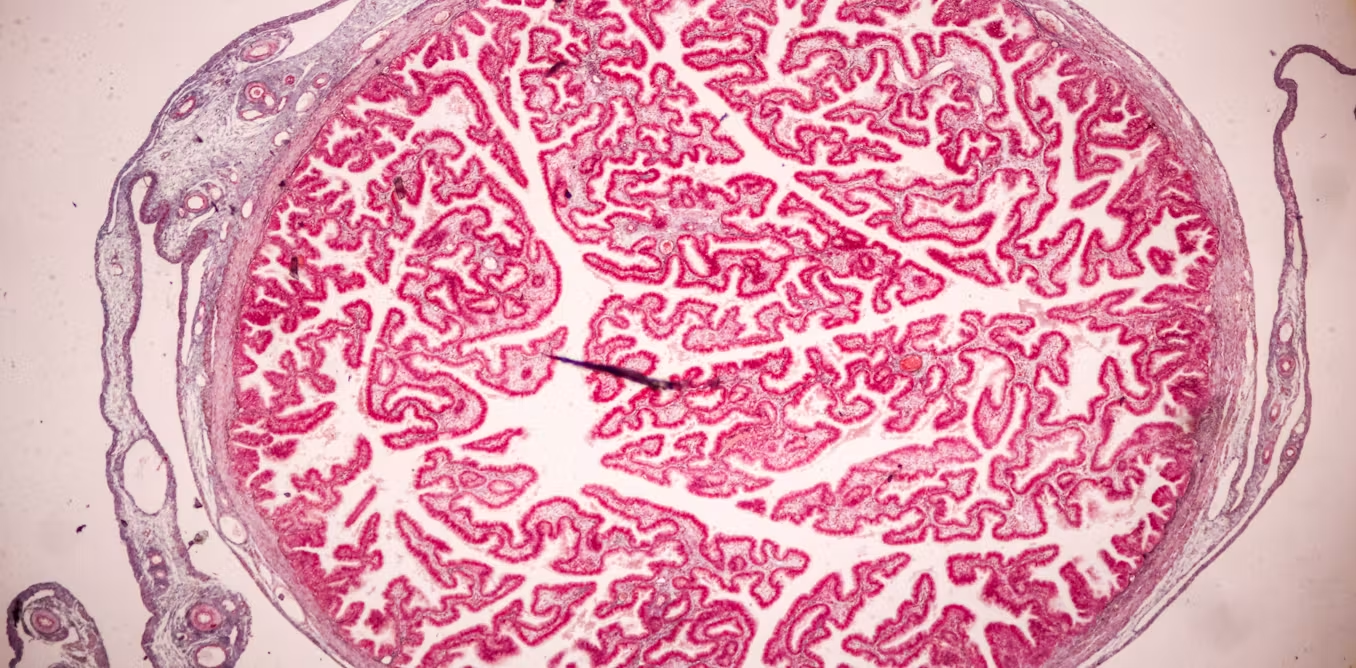
The placenta is a temporary organ that develops in the uterus during pregnancy. It links to the baby through the umbilical cord and supports pregnancy by transferring nutrients, oxygen and hormones, while removing waste products such as carbon dioxide.
During pregnancy, the placenta is treated as vital. It is monitored because it helps sustain the baby. But after birth, it can quickly become treated as a disposal issue rather than something a woman may have feelings, beliefs or plans about.
A review of placenta disposal practices among indigenous groups globally found that rituals surrounding the placenta often carry special meaning for women and families. In Niger, for example, the placenta has been described as a “travelling companion” that accompanies the baby from one world to the next.
In many cultures, the placenta is buried. The burial site may be chosen carefully, sometimes in the family home or on ancestral land. The ritual may be linked to the baby’s protection, the mother’s future fertility or the child’s long-term wellbeing.
Some people consume the placenta after birth, for example in capsules or smoothies, in the belief that it may support energy, mood, milk supply or postnatal recovery. If a woman is considering eating the placenta, she can be given evidence-based information about infection risks.
In UK maternity care, practice varies. Some NHS organisations provide patient information explaining that women may be able to take the placenta home, provided safety requirements are met. Royal Berkshire NHS Foundation Trust, for example, tells patients that the placenta may be stored for 48 hours in case testing is needed, then either disposed of by the hospital or taken home. The trust explains that, if the placenta is disposed of by the hospital, it will be treated as clinical waste and incinerated.
Other NHS guidance gives practical advice on taking a placenta home, including safe storage, burial on private land and avoiding public spaces. These details are important because a placenta can deteriorate quickly after birth and may carry infection risks. If there has been an infection, or if the mother is carrying a blood-borne virus, the hospital may need to retain the placenta for safe disposal.
There are also clinical reasons why a placenta may need to be examined or tested, for example after pregnancy complications, suspected infection, preterm birth or foetal growth restriction.
These clinical needs are important – but they do not remove the need for respectful discussion with the mother.
The problem is that women may not know they have options unless someone tells them. In my study on migrant Nigerian mothers’ experiences of antenatal care, mothers described how cultural practices were often not discussed during routine care. Some women concealed cultural practices because they were unsure how they would be received. Others were focused on understanding a new healthcare system and did not feel confident raising issues that were important to them.
Respectful discussion
During pregnancy, midwives could ask: “Have you thought about what you would like to happen to your placenta after birth?” This discussion could sit naturally within the birth plan, alongside conversations about how the placenta will be delivered after birth. Birth plans already include preferences about labour, pain relief, feeding and immediate care after birth. Adding placenta disposal would be a small change with practical and cultural benefits.
It would also support safer care. If women tell their midwife in advance that they want to take the placenta home, staff can explain when this is possible, when it may not be possible, and how to store, transport or bury it safely. If a placenta needs to be retained for clinical testing, that can be explained clearly.
Good placenta etiquette is simple: ask, explain the clinical and safety issues, and respect the woman’s choice wherever possible.
For some families, the placenta is part of the story of birth. Treating it as an afterthought can cause avoidable distress.
The placenta receives close medical attention throughout pregnancy because it sustains the baby. After birth, it deserves careful handling too.

