

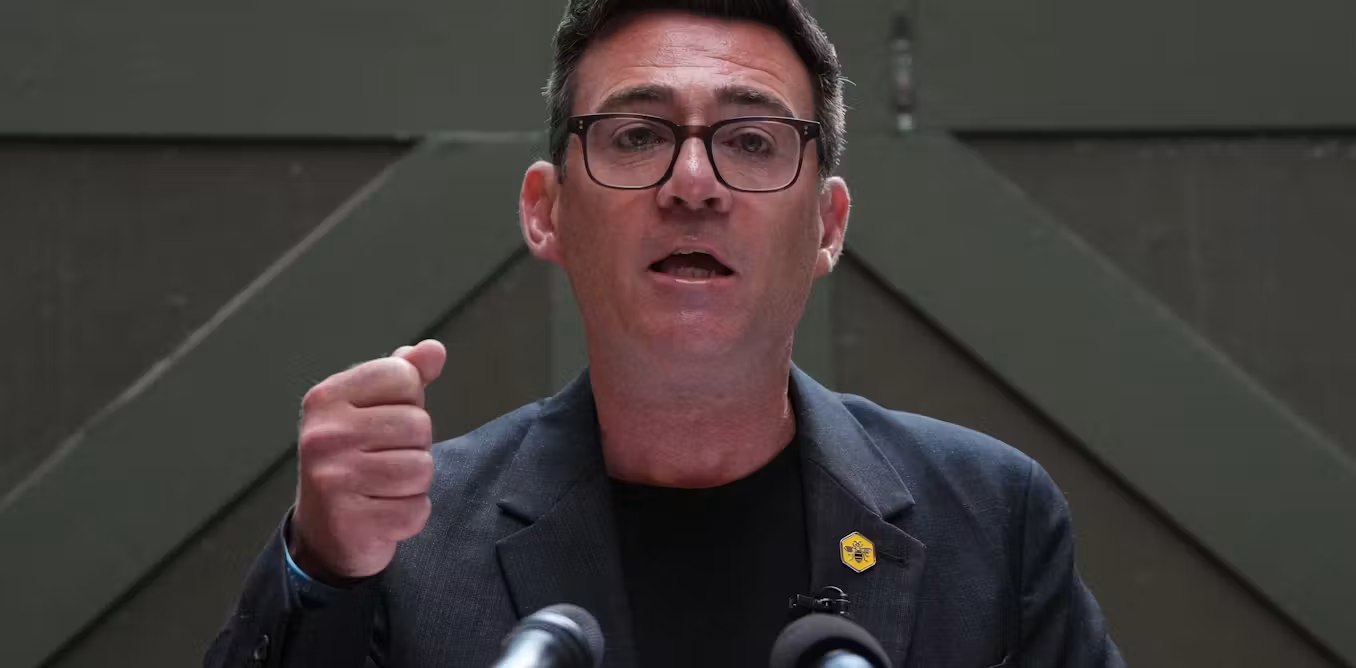
Andy Burnham’s long held ambition to be the UK’s prime minister will come with some daunting economic challenges.
Productivity growth is at a virtual standstill, real incomes have stagnated and the cost-of-living crisis has become a permanent fixture for many households. Meanwhile, the government spends around £110 billion a year paying the interest on nearly £3 trillion of debt.
Burnham says he is on a “10-year mission” to transform the country. So what might he do to try to fix the British economy?
One thing that voters can reasonably expect is a move towards greater devolution of power – especially spending power – to the English metro regions. As mayor of Greater Manchester, Burnham often argued that too many economic decisions were made in London, and that this held the rest of the country back.
Burnham believes that allowing other regions to implement their own locally led pro-growth policies could transform Britain’s economic prospects. It’s a view shared by one of his key economic advisers, Jim O’Neill, who has long argued that creating metro growth hubs could substantially boost the UK’s GDP.
This approach is bound to be controversial. It could mean, for example, taking resources away from the £49 billion Heathrow airport expansion plan to help fund HS2 so it can reach the north.
More radically, it might require a revamp of the whole system of local government finance, starting with reforming the council tax system, which is still entirely based on property values set in 1991.
This would mean higher bills for areas where house prices are high, such as London and the south-east. But it could substantially cut payments for those living elsewhere – which could be popular in red wall constituencies where Labour has been losing support.
Social care
Burnham has also spoken about reforming the UK’s social care system. Social care is not part of the NHS, which means those who need residential care in old age must either sell their house to fund it, or rely on cash-strapped local councils.
Finding a solution to social care has proved too challenging for successive governments. When Burnham was health secretary under Gordon Brown in 2010, he proposed putting a tax on the value of homes after the owner’s death – which critics labelled a “death tax”.
Nevertheless, he may try something similar as prime minister. Solving the social care conundrum would dramatically ease the financial strain on the NHS.
Nationalisation
Another cause that Burnham has recently embraced is tackling the poor performance of the companies that supply households with energy and water.
First in line would be Thames Water, which is already facing bankruptcy and a temporary government takeover. A straight-out nationalisation of water would be expensive, with that company alone currently valued at £10 billion.

Yau Ming Low/Shutterstock
But better public utilities could also boost productivity. Housing development in East Anglia is now being held back by lack of water, for example, as no new reservoirs have been built in the UK since 1992. And a water company which didn’t have to pay out hundreds of millions of pounds to shareholders could mean lower household bills.
Bending, not breaking, the fiscal rules
Burnham has promised to stand by Labour’s commitments not to increase VAT, income tax or national insurance. He has also pledged to stick by Labour’s fiscal rules, including the key stipulation that day-to-day government spending must be covered by tax revenues within three years, so that borrowing can only be for long-term capital investment.
These rules have been structured in such a way that could still give a Burnham administration considerable leeway to boost spending on public infrastructure.
Burnham could argue that increasing public investment this way would pay for itself by boosting UK productivity.
He may also want to look at other ways the Treasury could raise money without breaking Labour’s manifesto pledges. There are quite a few options, including higher wealth taxation, or changes to tax relief on pensions and savings.
Burnham is also taking advice from Carys Roberts, the former head of the Institute for Public Policy Research thinktank, and a strong advocate of wealth taxes, which may indicate his direction of travel.

EPA/ADAM VAUGHAN
All of these reforms will face fierce political opposition from the Conservatives and the right-wing press, which in the past have been enough to scupper them.
But if Burnham keeps his Labour party colleagues happy, he need not face an election for three years. And if he manages to improve public services, boost growth and lower the cost-of-living crisis, he may be able to turn round Labour’s prospects.
The key is the government delivering the benefits of higher taxes to ordinary citizens, both by reducing the cost of living and providing improved services. If Burnham can square this circle, while avoiding the ire of financial markets, he will have pulled off a trick which his predecessor singularly failed to do.

