

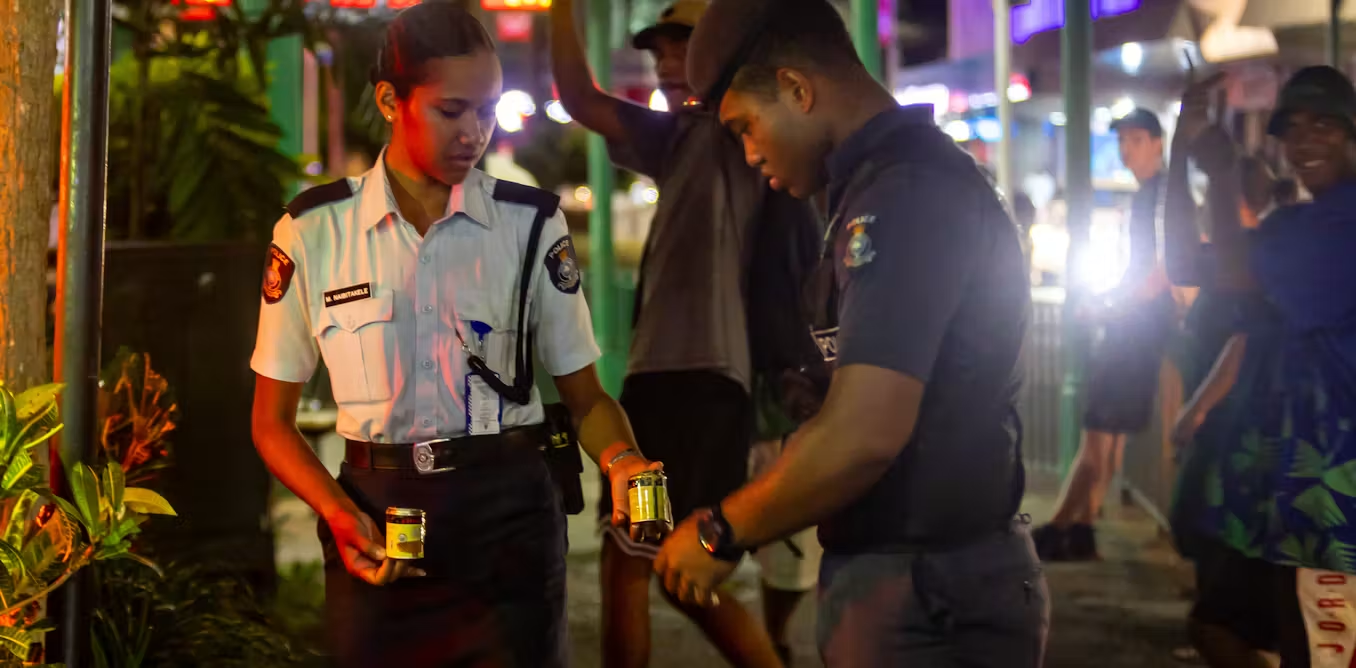
Fiji is at the centre of an illicit narcotics crisis described as a national emergency, driven by an escalating demand for hard drugs in Australia and New Zealand.
Drugs, particularly cocaine and methamphetamine, are now rife in Fiji. What was once solely a transit point for the international market has grown to create local demand.
Critics argue current penalties to discourage offending are not working, prompting calls for the reintroduction of the death penalty for drug offences.
Last year, the ringleaders in Fiji’s largest methamphetamine importation (more than four tonnes) were sentenced to life imprisonment with a non-parole period of 30 years.
A more recent bust involving drugs destined for Australia and New Zealand netted more than two tonnes of cocaine. As large interceptions become more common, they are contributing to rising concerns about drug offending in Fiji.
But calls for the reintroduction of the death penalty are based on moral panic and fail to address the underlying issues of Fiji’s drug crisis.
Under the 2004 Illicit Drugs Act, the penalty for all drug offences is “a fine not exceeding $1,000,000 or life imprisonment or both”.
Prison sentences are almost guaranteed. In some cases, sentences surpass those for rape and murder. These penalties are out of line with those for offences in Australia and New Zealand when we look at comparable offending.
Yet, some argue this is not enough to dissuade drug offenders.
Fiji’s history of the death penalty
Fiji completely abolished the death penalty in 2015, with the removal from military law, making it the 99th country globally to do so.
This was prompted by the introduction of the 2013 Constitution, which guaranteed Fijians the right to life with no exception for capital punishment. The death penalty for ordinary crimes was removed in 1979 and from criminal law in 2002.
The death penalty was last used in 1964, when a young man was sentenced to death by hanging for the murder of his wife, child and grandfather.
However, Fiji last sentenced someone to death in 2002. George Speight’s sentence for treason was later commuted to life imprisonment. In 2024, he was granted a presidential pardon and released from prison, almost 25 years after overthrowing the Chaudhry government and holding members of parliament hostage for 56 days during the 2000 coup.
Out of step with other countries
Historically, Fiji has only had the death penalty for the most serious crimes, including treason, murder and genocide. Reintroducing it now for drug offences would go against established precedent.
It would also be backsliding on Fiji’s human rights commitments and be at odds with global liberalisation, including decriminalisation, harm reduction initiatives and the reduction of ineffective, lengthy prison terms.
The death penalty will not solve issues associated with drugs in Fiji. These include the HIV/AIDs crisis, the underdiagnosis and lack of treatment of mental health issues and the economic and subsistence conditions pushing individuals towards drugs for profit.
This affects particularly those with low levels of formal education, in economically underprivileged areas. The death penalty will not help disadvantaged, disaffected and disenfranchised youth. In fact, it would affect youth disproportionately as they already are the largest demographic in Fijian prisons for drug offences.
Cannabis offenders and recreational users
Cartel-backed, transnational, commercially imported hard drugs are driving this push for the death penalty.
However, the death penalty would also catch cannabis offences, which account for most drug offences in Fiji.
Cannabis is domestically cultivated and readily available. There is also an increasing discourse surrounding drug offenders and rehabilitation, assuming all drug users are addicts. This overlooks recreational users who could be caught up in this approach, should the death penalty be reintroduced.
To address drug offences, Fiji needs a multi-pronged, multi-organisational approach. This includes harm-reduction services, rehabilitation centres and prison alternatives for low-level offending, as well as greater economic incentives, sustainable development and employment opportunities.
Without addressing these issues, reintroducing the death penalty for drug offences is putting the ambulance at the bottom of the cliff.
It also risks straining diplomatic relations with a growing number of foreigners caught up in drug offences in Fiji.
In 2024, the Fijian government greenlit a feasibility study for medicinal cannabis. Turning towards local medicinal cannabis production for export and generating sales revenue and taxable income may help address a number of the stressors driving Fiji’s current drug crisis.
However, this liberalisation is at odds with broader discussions on the death penalty.
A new legal framework
This conversation around the death penalty comes amid Fiji’s review of its drug laws, looking to replace its 2004 Illicit Drugs Act with a new Counter Narcotics Bill. The bill intends to establish a specialised anti-narcotics bureau and rehabilitation services.
There has been no indication whether this bill will revise any of the current penalties for drug offences, including the potential reintroduction of the death penalty.
Given the strong diplomatic ties New Zealand and Australia maintain with Fiji, many may find the death penalty for drug offending repugnant, especially as comparable penalties in each jurisdiction are lower and their citizens are implicated.
Yet, it is the Australian and New Zealand demand for hard drugs that is driving Fiji’s drug crisis and discussions about the death penalty.

