

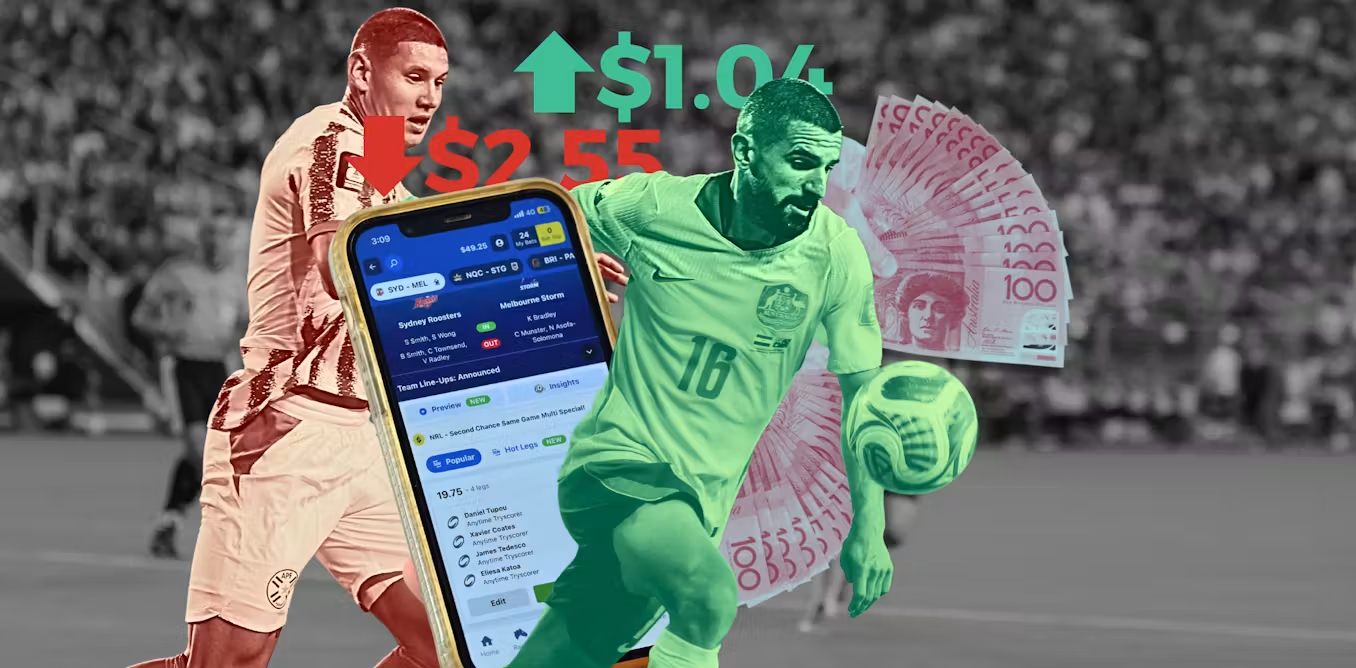
The FIFA World Cup is a global juggernaut of sport that provides fabulous marketing opportunities for its sponsors.
It is also projected to be the biggest gambling event in history.
And many Australian viewers are struggling to watch the event without encountering gambling advertisements and marketing content, both on television and on social media.
So how is this happening and what can viewers do about it?
Marketing, sponsorship and the World Cup
Bet365 is a sponsor of SBS’ World Cup coverage, so it manages to keep its logo well and truly in view despite gambling advertising bans during live sport in Australia.
This sort of sponsorship has long been a way for unhealthy commodities to elude ad bans, like tobacco companies in Australia in the 1970s.
Read more:
How gambling companies are copying the Big Tobacco playbook in Australian sport
Gambling is driven by relentless promotion of wagering operators. This includes ads that are allowed before and after games, including on SBS, the Australian broadcaster.
There has been recent criticism of SBS for showing gambling ads shortly before the Socceroos–Paraguay World Cup match as children in schools around the country tuned in.
An SBS spokesperson said the Bet365 ads complied with Australian laws and regulations.
It’s true SBS’ World Cup coverage conforms to existing restrictions, which requires gambling ads not to be shown from five minutes before the start of a game until five minutes after it ends, during the period of 5am to 8:30pm.
Outside of those times, ads are not permitted during play (they can be shown during breaks) and odds are not permitted during breaks in play.
SBS On Demand users can opt out of gambling advertisements. However, ads cannot be skipped during playback.
Also, there’s a chance young people will see gambling adverts: if you subscribe to a streaming service showing sport, like SBS On Demand, and you’re logged in, the service is unlikely to know how old the viewer is. And of course, most children know how to connect to streaming services.
In Australia, both broadcast and social media will face stricter new gambling regulations from January 1 2027.
These upcoming regulations won’t help anyone during this World Cup.
Is the government doing enough?
Most Australians – 80% according to a recent YouGov poll – want a total ban on gambling ads.
That is what late MP Peta Murphy and colleagues recommended in mid-2023: a straightforward ban.
The recommendations of the Murphy Committee were cross party and unanimous. Politicians across the spectrum want this to be properly addressed.
Partial restrictions can (and will be) circumvented by wagering companies.
Failing to act on such a pressing and growing public health problem is a matter of systemic failure by successive governments.
The harms of gambling are not trivial.
Lukas Coch/AAP
Some practical tips
In the absence of effective systemic reform, what can we do about gambling ads?
SBS allows viewers to opt out of gambling content on its streaming service. Some social media providers and other streaming services also allow users to block gambling ads and there are some apps that may block such ads.
Many critics of the government’s approach ask whether it’s fair to place the onus on viewers and social media users to opt out of gambling ads and marketing.
If you don’t want your kids exposed to gambling ads, there are few options for restricting them on free-to-air media. You can listen to ABC coverage on the radio, which is ad free. You could avoid watching pre-game coverage and then turn off the coverage at 8:30pm, or change channels when an ad comes on.
There is some argument that gambling ads provide an opportunity to speak to kids about gambling harms. Gambler’s Help provides some tips for helping parents reduce the likelihood of gambling harm.
If kids have smartphones or tablets, try to ensure the platforms they use to watch sport have any available settings adjusted to block such advertising. Blocking gambling apps from being downloaded or websites accessed would also be a good idea.
It may be possible to block gambling ads by choice on social media and other live streaming services after January 1: the Australian Communications and Media Authority states streaming services must abide by all the rules that apply to free-to-air broadcasts.
Above all, telling your local federal politician about your concerns would be an excellent idea: a letter, phone call, or conversation may make a difference.
Stronger leadership is needed
Prime Minister Anthony Albanese has repeatedly argued his government doesn’t want to stop people from making a decision to gamble.
Read more:
‘Small and underwhelming’: Albanese’s gambling reforms won’t do much to reduce harm
But nothing recommended by Murphy’s committee would have had that effect, including the ads ban.
Instead, he’s condemned another generation of young people to the ongoing, persistent, and invidious effect of gambling normalisation. Ads and promotions are hugely important to that process, which is why the industry fought to retain them.
If we want to protect children, then getting ads off air and social media would have been a major step.

