

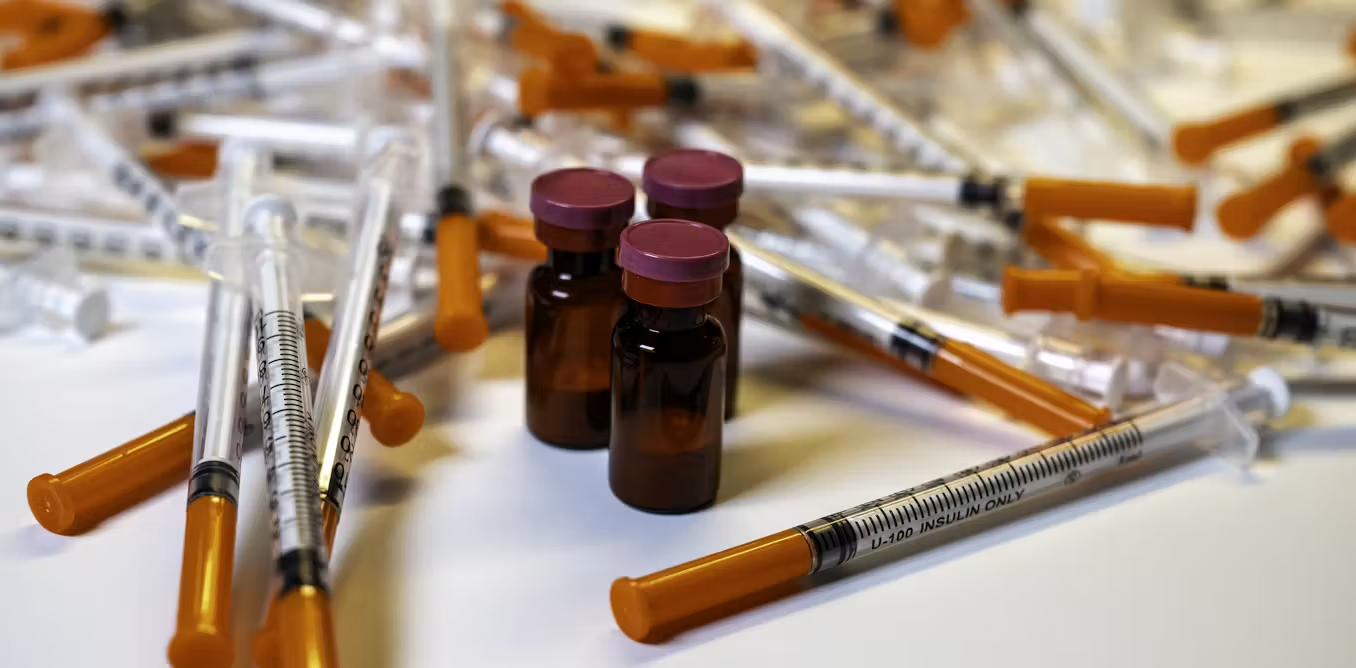
A wave of unregulated peptides is sweeping the wellness world, sold online with bold promises about muscle gain, anti-ageing and fat loss. But concern is growing about side-effects, and almost nobody is asking whether these substances affect men and women in the same way. The evidence suggests they do not.
Women are one and a half to two times more likely than men to suffer a bad reaction to a drug, partly because more women take prescription medicines in the first place. They live longer than men on average and are more prone to conditions requiring long-term medication, such as osteoporosis, lupus and rheumatoid arthritis, and tend to experience more severe symptoms when they do. That raises the odds of drug interactions before biology even comes into play. Differences in how the body breaks down and clears drugs from the body, along with hormonal and immune variation, stack the risk further.
Women also tend to mount a stronger immune response to drugs, including ones that have been through rigorous testing, let alone ones that have not.
Why women’s hormones make this riskier
A woman’s menstrual cycle depends on a finely tuned communication system running between the brain and the ovaries, which keeps reproduction supplied with the right hormones. This system relies on a careful balance of several hormones and continuous communication between brain regions, such as the hypothalamus and the pituitary gland. Peptides that artificially push hormone levels up are entering the system from the outside, and it isn’t built to absorb that kind of interference.
Two peptides marketed for muscle growth and anti-ageing – ipamorelin and CJC-1295 – work by raising the body’s production of growth hormone and a related hormone called IGF-1, keeping levels raised for days at a time. That sustained rise can cause swelling and fluid retention, and has been linked to hormonal imbalances, disruption to ovarian function and a higher risk of miscarriage.
This is only one small part of the picture. The liver, thyroid, pancreas and adrenal glands all feed into and respond to this same hormonal network, and the wider effects of peptides on these organs remain largely unknown.
A peptide with a link to cancer
Thymosin beta-4 is a peptide made naturally in the body that helps repair damaged tissue. A synthetic version of part of this peptide, called TB-500, is marketed as an aid to repair tissue, reduce inflammation and improve flexibility. While the natural peptide plays a useful role in healing, it has also turned up in several cancers, including breast cancer cells and some common forms of lung cancer.
Lung cancer rates in American women under 65 overtook those in men of the same age in 2021, reversing a trend that had held for decades. Women are also often diagnosed at a later stage than men, when cancer is harder to treat. Given that context, a peptide that turns up in breast and lung cancer cells is not a risk to take lightly – whatever the historical pattern by sex.
Copper peptides: useful on skin, risky by injection
GHK-Cu, a tripeptide-copper complex, has become popular in anti-ageing skin creams, where laboratory studies suggest it may support collagen production and skin elasticity. The trouble starts when it is injected instead.
Injectable peptides are not licensed for human use, and injecting carries a particular hazard. The dose delivered to the body can be far higher than from a cream or tablet, since injected substances bypass digestion and the skin barrier and go straight into the tissues at full strength. Because these products are unregulated, buyers often have no reliable way of knowing the actual strength of what is in the vial.
This is a serious concern for women of child-bearing age, since it is not known whether these peptides cross the placenta into a developing baby.

New Africa/Shutterstock.com
Too much copper in the body can cause abdominal pain, nausea and vomiting. In pregnancy, the stakes are higher still. Researchers have found that for every additional microgram per millilitre of copper in the mother’s blood, the risk of premature birth rises by 30%, and pregnancy is shortened by an average of 1.6 days.
Excess copper has also been linked to restricted growth in the womb and neurological problems in the baby, as well as a range of gynaecological conditions.
Even where you inject it matters
For women, the risk is not only about which peptide is used but where it goes into the body. Men and women carry fat differently, and even the same person has more fat in some areas than others. Women tend to store fat around the hips, thighs and buttocks, meaning there is less of a fatty buffer in the abdomen, making stomach injections riskier there.
Men, meanwhile, are typically heavier, have a larger body surface area and they tend to have more water in their bodies. That means the same dose has less room to spread out and dilute in a woman of similar age and weight, so its effects are likely to be stronger.
Unregulated peptides are a gamble for anyone who takes them. But for women, a combination of biological, hormonal and anatomical factors stacks the risk higher still. Until these substances go through properly controlled studies in human volunteers, nobody can say with any confidence how a given body will respond.

