

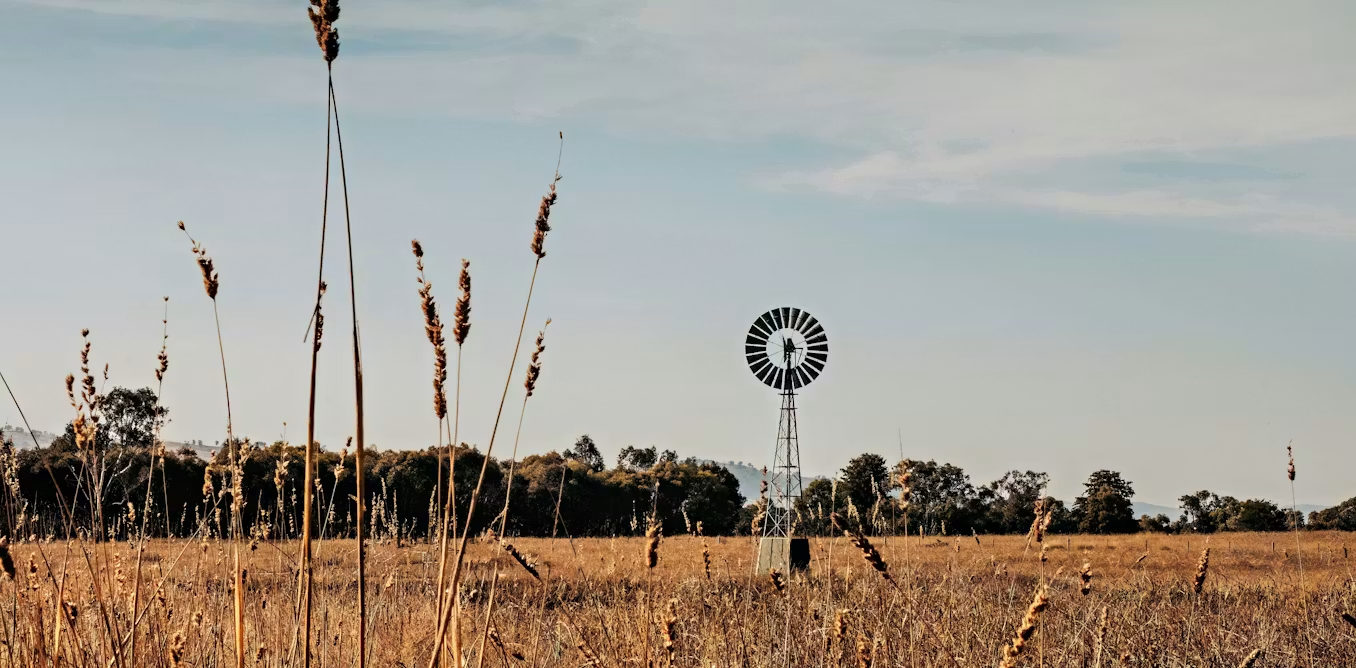
Climate models are now confidently projecting the world will experience a very strong El Niño weather event this year. For Australia, this Pacific Ocean phenomenon means we are likely to see hotter and drier conditions for the rest of 2026 and into 2027.
While it’s only one of several factors influencing our weather, an El Niño event increases the likelihood of drought in eastern and southern Australia. This can directly impact local economies, with social ripple effects across affected communities.
El Niño can also affect other Australians indirectly through its impacts on food production and prices. However, news headlines warning of possible food shortages or soaring prices often do not reflect real, observable changes.
Read more:
The weather bureau has just declared an El Niño. What could this mean for Australia?
Communities exposed to the weather
Across eastern Australia, weather-dependent agricultural regions are typically affected first and foremost when an El Niño hits. Drought and water shortages have a direct impact on livelihoods.
This year, farmers in parts of Victoria, southern New South Wales and South Australia have actually had unusually wet and warm conditions, supporting a strong start to the season for many crops.
That’s no guarantee there won’t be drought conditions later. And in some other areas, including in parts of northern NSW and southern Queensland, dry conditions persist.
Different regions, different impacts
When a drought hits, not all agricultural regions can weather the shock the same way. Some have shown strong economic resilience to previous droughts. Others have taken longer to recover.
Between 2017 and 2020, large parts of NSW experienced severe drought. A recent study found this drought affected the Hunter Valley region (north of Sydney) particularly severely compared with other areas of the state.
By 2020, the level of agricultural employment in the Hunter Valley region was 75% lower than an estimate of what it would have been without the drought – and showed only slow signs of recovery years later.
In contrast, regions such as the Riverina in southwestern NSW showed a much faster recovery. Better and more extensive irrigation infrastructure across the region partly explains this faster recovery.
But other factors, including diversified production systems and better access to markets, also contributed to the Riverina’s economic resilience.

Dean Lewins/AAP
Drought’s hidden toll
Beyond these economic impacts, there are also social impacts, some of which may not be immediately obvious. Perhaps most notable is the toll drier conditions can take on stress and mental health in rural communities.
Previous research has found evidence that tragically, periods of drought are linked to higher rates of suicide in affected communities.
This year, a range of factors could leave some regional communities especially vulnerable to further economic impacts from drought. Farmers have already been dealing with higher fuel and fertiliser costs due to war in the Middle East.
Why it’s hard to predict the impact on food prices
Beyond the communities directly supported by agriculture, El Niño could also affect consumers if lower production leads to higher food prices.
That would be bad news, given stubborn cost-of-living pressures. But which foods will be affected – and by how much – is a nuanced issue and often very hard to predict.
For commodities we export overseas, such as wheat and barley, the prices farmers receive depend on global markets and international prices.
Perhaps surprisingly, evidence from previous El Niño years suggests that globally, food and agricultural commodity prices are not affected substantially. That’s because El Niño itself is a global phenomenon.
Take wheat, again, as an example. El Niño typically lowers Australian wheat production. But globally, wheat prices are more likely to fall, not rise. That’s because El Niño may bring favourable weather conditions to other wheat-exporting countries – notably Argentina and parts of the United States.
How can we be better prepared?
Australia can’t prevent El Niño events, but it can reduce their economic and social consequences. The most effective responses are often those that improve resilience before drought conditions become severe.
A top priority is better monitoring of drought impacts beyond rainfall and agricultural production. Especially in the short-term.
Beyond efforts from the Australian Bureau of Statistics to modernise agricultural production data, we also need better data on regional economic activity, food insecurity, health outcomes and mental well-being that could help governments identify vulnerable communities earlier and target support more effectively.
For example, in ongoing research, we have been exploring data from the Pharmaceutical Benefits Scheme to detect early signs of community distress. This could prove a useful tool to intervene before mental health pressures translate into more serious outcomes.
Investing in resilience
Spending on adaptation and resilience – water security, irrigation infrastructure, climate information services and early warning systems – should also be viewed as an economic investment rather than a cost.
Australia isn’t likely to face broad-scale food shortages anytime soon. The greater challenge is ensuring that all Australians can access and afford nutritious food during periods of climatic and economic stress. And that farmers and communities are better prepared for these types of events.
Strengthening the resilience of our food system and supporting vulnerable households should therefore be central to any long-term response.

